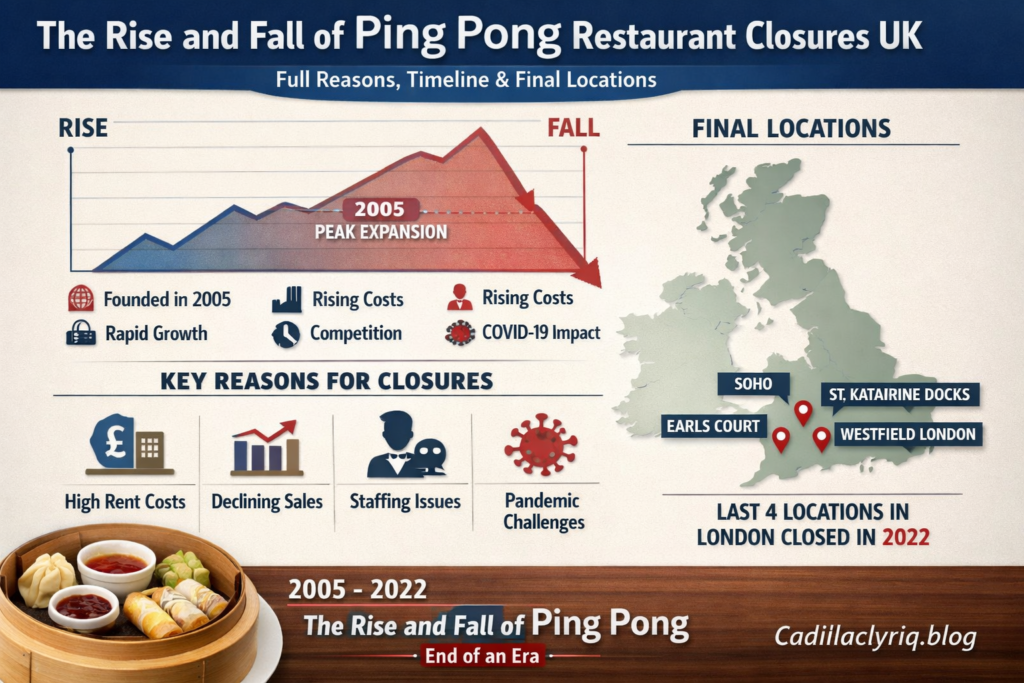
The story of Ping Pong Restaurant Closures UK is one that reflects the changing dynamics of the UK dining scene over recent years. Once a vibrant and popular dim sum and Asian cuisine destination, Ping Pong restaurants captured the hearts of diners in major cities across the United Kingdom. Over time, however, economic pressures, shifting consumer behavior, and external challenges combined to bring about a sudden end to this beloved restaurant chain. In this article, we explore the full background of the closures, tracing the journey from rise to eventual shutdown, while uncovering significant lessons and impacts felt across the UK hospitality sector.
For many years, the restaurant group known as Ping Pong offered a unique blend of modern Asian dining experiences, dim sum specialties, and an energetic social atmosphere that made it a favorite for both casual meals and night-out occasions. With its signature dishes and vibrant interiors, Ping Pong seemed poised for long-term success. Yet, behind the scenes, mounting challenges were steadily eroding its footing. The closures sparked widespread interest and concern, especially among regular diners and industry observers who wondered what had gone wrong and how such a recognizable name had come to this point.
Table of Contents
ToggleIntroduction
Across the UK dining landscape, the news of Ping Pong Restaurant Closures UK sent ripples throughout food lover communities and industry circles. People who had celebrated birthdays, enjoyed weekend brunches, or savored evening cocktails at these locations were left questioning how and why these changes occurred. This article dives deep into the full reasons, timeline, and impact of the closures to provide readers with a complete understanding of this significant event in UK restaurant history.
In the age of social media, the announcement of the final closures spread quickly, with former patrons expressing nostalgia and disappointment in equal measure. For many, Ping Pong held a sense of familiarity and excitement — a place where modern Asian cuisine met a lively ambiance. As the doors shut for the final time, the narrative shifted from celebration of its offerings to a retrospective on its journey and the implications of its exit from the UK market.
History of Ping Pong in the UK
The story of Ping Pong Restaurant Closures UK begins with the launch of the first restaurants in the United Kingdom. Ping Pong first entered the UK market with a bold vision: to bring inventive, high-quality Asian and dim sum dishes to a broad audience in stylish settings. As the brand expanded, it opened multiple locations primarily across London, building a reputation for fresh dim sum, creative small plates, and a vibrant social spirit that appealed to diverse audiences ranging from young professionals to tourists and food enthusiasts.
At its peak, Ping Pong operated several busy restaurant sites, each becoming a notable part of the culinary fabric of their respective neighborhoods. Diners appreciated the combination of modern design, approachable cuisine, and consistent service that defined the chain. Over time, some critics praised the brand for its ability to adapt traditional elements of Asian cooking to contemporary tastes, making it accessible to a wide range of diners in a competitive market that included both established Asian eateries and emerging fusion concepts.
Reasons Behind the Ping Pong Restaurant Closures UK
A central question arising from the Ping Pong Restaurant Closures UK is: what exactly caused the closures of what had once been a thriving restaurant chain? There was no single reason but a combination of factors that accumulated over time. One of the most significant elements was financial strain. Like many hospitality businesses, Ping Pong faced intense economic pressure, especially following the global coronavirus pandemic. During this period, lockdowns and restrictions greatly reduced dine-in traffic, forcing restaurants to adapt with limited resources and uncertain outlooks.
Even as restrictions eased, the aftereffects of the pandemic continued to hinder recovery efforts. High rental costs in prime locations compounded financial challenges, making it difficult for the business to maintain profitability. Many urban restaurant spaces in the UK experienced steep rent increases, leaving operators with slim margins. Additionally, the broader cost-of-living crisis affected consumer spending habits, with many diners opting for more budget-friendly options or shifting preferences toward delivery and casual dining that did not align with Ping Pong’s sit-down restaurant model.
Another layer of pressure came from intense competition in the UK food scene. With the rise of new contemporary Asian eateries, pop-up concepts, and global brands introducing similar menus, Ping Pong faced a crowded and evolving marketplace. Diners seeking innovation often had a growing array of choices, making it harder for established brands to maintain relevance without continual reinvention and investment. All these pressures collectively contributed to decisions that ultimately led to closures.
Timeline of the Closures
To fully understand the Ping Pong Restaurant Closures UK, it is important to trace the timeline of key events. Early in the process, there were subtle signs of strain as a few locations began operating with reduced hours or temporarily closing for restructuring. These early changes raised questions among regular patrons but seemed like routine business adjustments at first. However, these initial shifts would foreshadow a larger trend toward consolidation and eventual closure.
As the year progressed, official announcements confirmed that multiple Ping Pong sites would be shutting down. Social media channels, including the brand’s own profiles, were utilized to communicate updates with followers. Many regular customers were surprised to learn that beloved locations in areas such as Soho and Southbank were scheduled to close as part of a wider strategy to downsize operations. Employee testimonies and customer reactions on public forums highlighted both shock and sadness at the news, reflecting the emotional connection that many had formed with the restaurants.
The final announcement came when management confirmed that the last remaining UK locations would cease trading entirely. This marked a definitive end to the chain’s presence in the UK, bringing to a close a journey that spanned nearly two decades. With confirmation of the last closures, former patrons and industry observers took stock of the legacy left behind, considering both its early successes and eventual challenges.
Impact of the Closures
The Ping Pong Restaurant Closures UK had varied and far-reaching effects on different groups. For former employees, the closures brought abrupt changes and uncertainty. Many staff members lost their jobs, prompting discussions around employment rights, redundancy support, and transition assistance in a challenging economic climate. Former team members shared heartfelt farewells and memories from their time working at different locations, emphasizing the camaraderie built over years of service.
For loyal customers, the closures represented the loss of a familiar and socially enjoyable dining option. Social media was filled with posts revisiting memorable meals and experiences, showcasing how deeply the brand had resonated with its audience. Some customers expressed concern that the closure signaled a broader trend affecting mid-size restaurant chains in the UK, where high operating costs and fierce competition have made sustainability difficult.
Within the UK restaurant industry as a whole, the closures served as a notable case study in how external forces — such as rising costs, changes in consumer habits, and long-term impacts from the pandemic — can influence even well-loved brands. Analysts and bloggers pointed to the situation as evidence of the challenges facing hospitality businesses seeking to balance authenticity with commercial viability. While some competitors continue to thrive, the exit of Ping Pong raised questions about the resilience of similar dining concepts.
Lessons Learned and Future Outlook
Looking back at the Ping Pong Restaurant Closures UK, there are important lessons for restaurateurs and industry stakeholders. One key takeaway is the importance of adaptability. Restaurants that successfully navigated post-pandemic conditions often had diversified revenue streams, including strong delivery and takeaway offerings or flexible space utilization. The transition from dine-in-only models to hybrid approaches allowed some businesses to maintain customer engagement despite fluctuations in footfall.
Another lesson is the critical role of financial planning and cost management in sustaining long-term operations. High rental expenses, especially in major city centers, can quickly erode profitability. Organizations that proactively negotiate favorable terms, explore alternative locations, or embrace strategic partnerships tend to weather economic uncertainties more effectively. Furthermore, ongoing investment in customer experience and innovation helps maintain relevance in a market where consumer preferences evolve rapidly.
The future outlook for the UK dining scene remains dynamic. While the closure of Ping Pong may be viewed with nostalgia and regret, it also opens space for emerging concepts to fill the void. New restaurants with fresh approaches to Asian cuisine and more adaptable operating models are already gaining traction. Ultimately, the landscape will continue to reflect a mix of challenges and opportunities, with industry players drawing on past experiences to inform future strategies.
Conclusion
The story of Ping Pong Restaurant Closures UK is one of both achievement and adversity. From its early days as a vibrant addition to the UK culinary scene to its eventual closure amid mounting pressures, Ping Pong’s journey underscores the complexities of running a restaurant business in a competitive and ever-changing environment. While the closures marked the end of an era for loyal customers and staff, they also shed light on the importance of resilience, adaptability, and strategic innovation in today’s hospitality landscape. As new concepts rise to meet evolving tastes, the legacy of Ping Pong will remain part of the story of UK dining over the past two decades.
FAQs
What caused Ping Pong Restaurant Closures UK?
The closures resulted from a combination of financial strain, high rental costs, lingering effects of the pandemic, and increased competition in the UK dining market. These factors together made it unsustainable for the chain to continue operations.
When did Ping Pong officially close all its UK locations?
The final closures were confirmed through official announcements and social media updates, signaling the end of trading at all remaining UK restaurants after a phased shutdown process.
Which were the final Ping Pong locations in the UK?
Final locations affected included major sites in areas such as Soho, Southbank, St Christopher’s Place, and Bow Bells House in London, among others, before the complete shutdown.
Are there any plans to reopen Ping Pong in the UK?
As of now, there have been no official announcements regarding plans to reopen Ping Pong restaurants in the UK. The closures appear to be permanent.
How has the closure affected the UK restaurant industry?
The closure highlighted broader challenges faced by restaurants, including high operating costs and shifting consumer habits. It prompted industry discussions about sustainability and adaptability.
What alternatives can diners explore now that Ping Pong restaurants are closed?
Diners interested in Asian cuisine and dim sum can explore independent or emerging restaurant concepts across the UK that offer similar dining experiences with varied culinary interpretations.